
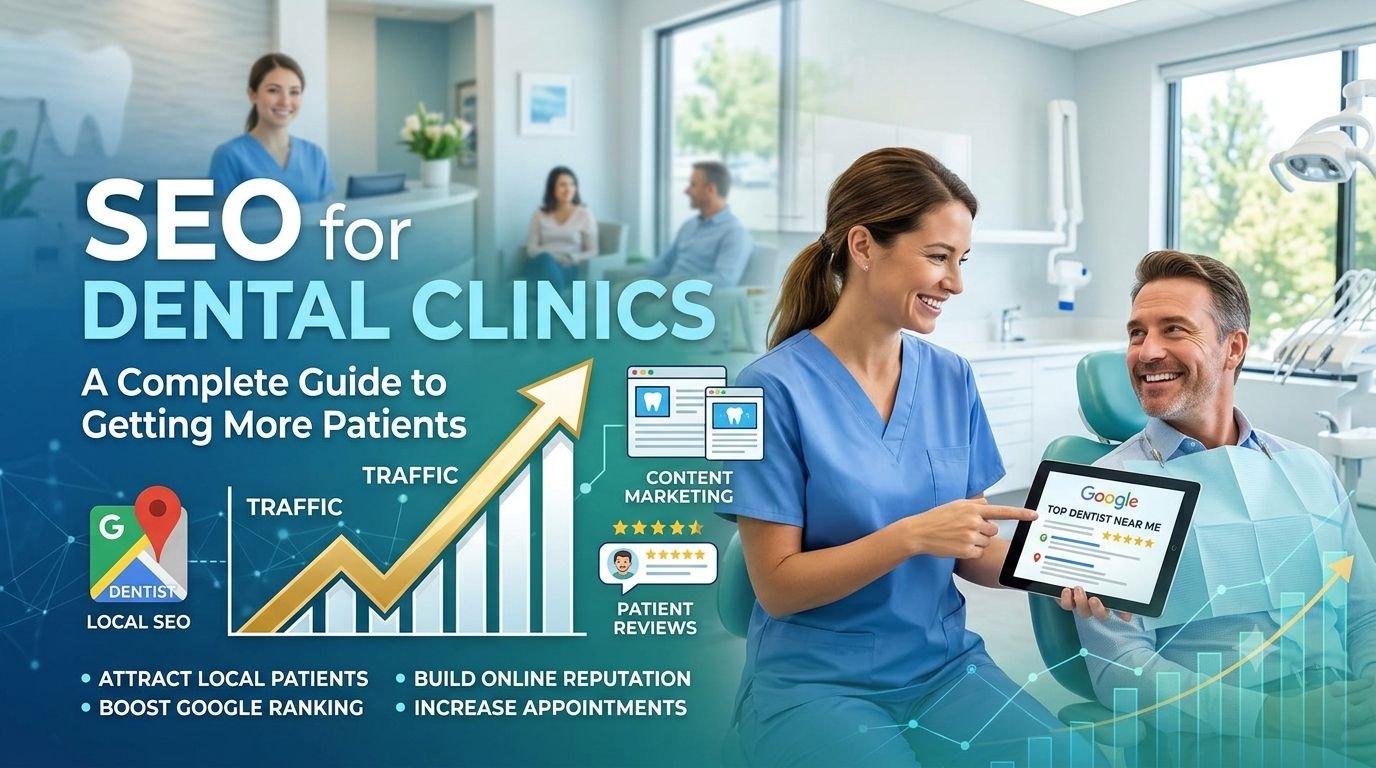
Think about the last time you needed a service you’d never used before. You probably picked up your phone and searched. Patients do exactly the same when they need a dentist. They type “dentist near me” or “emergency dental care” and usually pick from the first few results they see.
If your clinic isn’t showing up there, those patients are going to your competitors. That’s where SEO for Dental Clinics comes in. This guide covers what matters, in plain terms, so you can start attracting more patients from search.
Why SEO Matters for Dental Practices
Dentistry is local and trust-driven. People want someone close, credible, and easy to book. Search engines are where that decision starts, and unlike paid ads, good SEO keeps working after you stop spending on it.
A well-optimized site brings patients who are already looking for what you offer. That’s very different from interrupting someone with an ad they never asked for.
1. Start with Your Google Business Profile
For most local clinics, local SEO services can make the biggest difference in attracting nearby patients. Your Google Business Profile is a key part of local SEO, helping your dental clinic appear in the Google Map Pack and the business information panel beside search results.
- Claim and verify it. If you haven’t, do this first.
- Choose the right categories. “Dentist” as the primary, plus specifics like “Cosmetic dentist” or “Orthodontist” if they apply.
- Keep your name, address and phone number identical everywhere online. Small differences confuse search engines.
- Add real photos of your clinic, your team, and your equipment. Patients like seeing who they’ll meet.
- List your services and hours accurately, including holiday changes.
- Post updates now and then, such as offers, new services, or clinic news.
2. Collect and Respond to Reviews
Reviews influence both rankings and decisions. A clinic with 200 thoughtful reviews will usually beat one with 15, even if the second clinic is better.
Ask happy patients at the right moment, right after a good visit. A simple text with a direct review link works well. Never offer rewards for reviews, as it breaks platform rules.
Reply to every review, positive or negative. For negative ones, stay calm, thank them for the feedback, and invite them to contact you offline. Don’t share any patient health details in a public response. Future patients read how you handle criticism, and a gracious reply can win them over.
3. Research the Keywords Patients Actually Use
Patients rarely search the way dentists talk. They say “tooth hurts when I chew,” not “symptomatic pulpitis.” Build your content around real language.
Keywords usually fall into three groups:
- Service searches: teeth whitening, dental implants, Invisalign, root canal
- Local searches: dentist in [your city], family dentist near [neighborhood]
- Problem and question searches: how much do braces cost, what to do for a chipped tooth
Free tools like Google Search Console and Google’s autocomplete suggestions are a good start. Paid tools help if you want more depth.
4. Build Service Pages That Do Real Work
Many clinic websites squeeze every treatment onto a single “Services” page. That’s a missed opportunity. Give each major treatment its own page.
A strong service page explains what the treatment is, who it’s for, what the process looks like, roughly what it costs or how pricing works, and answers common worries. End with a clear way to book. Write for a nervous patient, not for a textbook.
If you serve several areas, create location pages too, but make each one genuinely useful. Copying the same text and swapping the city name is something search engines recognize and discount.
5. Fix the Technical Basics
You don’t need to be a developer, but a few things are non-negotiable:
- Mobile-friendly design. Most dental searches happen on phones.
- Fast loading. Compress images and avoid heavy plugins.
- HTTPS security. Your site should show as secure.
- Clean structure. Clear menus, logical headings, and working links.
- Click-to-call and easy booking. If a worried patient has to hunt for your number, they’ll leave.
Also add local business and FAQ schema markup, which helps search engines understand your clinic and can earn richer results.
6. Publish Content That Builds Trust
A blog isn’t about stuffing keywords. It’s about answering questions so well that patients feel they already know you before they walk in.
Good topics include what to expect at a first visit, how to choose between implants and bridges, how to ease dental anxiety, and how often to get a checkup. Add your dentists’ real names, credentials and photos. Search engines favor content that shows genuine expertise, especially for health topics, and patients do too.
7. Earn Quality Local Links
Links from other reputable sites signal that you’re trustworthy. For a clinic, the best ones are local: your chamber of commerce, local business directories, community event sponsorships, school partnerships, and local news mentions. A handful of relevant links beats hundreds of spammy ones.
8. Track What’s Working
SEO is gradual. Expect to see meaningful movement in three to six months, sometimes longer in competitive cities. Keep an eye on:
- Calls and booking requests from your website and Google profile
- Rankings for your priority keywords
- Organic traffic in Google Analytics
- Which pages lead to appointments
Don’t judge success by traffic alone. Ten visitors who book beat a thousand who don’t.
Common Mistakes to Avoid
- Ignoring your Google Business Profile after setting it up
- Using generic, copied content on service pages
- Letting your website slow down or break on mobile
- Buying cheap links or fake reviews
- Expecting overnight results
Getting Expert Help
Dental SEO takes consistent effort, and most practice owners would rather spend their time with patients. If you’d like a team to handle it, Leading Edge Info Solutions offers digital marketing services in USA tailored to healthcare and dental practices, from local SEO and website optimization to content and reputation management. A good partner will give you honest timelines and clear reporting, not vague promises.
Frequently Asked Questions
1. How long does it take for dental SEO to show results?
Most clinics start seeing early improvements in three to six months. Competitive markets can take longer. Local improvements, like a stronger Google Business Profile, often show results faster than website content changes.
2. How much does SEO for a dental clinic cost?
It varies with your location, competition, and the scope of work. Monthly retainers are common, and a good provider will explain exactly what’s included. Be cautious of anyone guaranteeing a number-one ranking.
3. What are digital marketing services in USA, and which ones does a dental clinic need?
Digital marketing services in USA cover SEO, Google Business Profile management, paid advertising, social media, email marketing, content creation, and web design. Most dental clinics get the best return starting with local SEO and reputation management, then adding paid ads or social media as they grow.
4. Is SEO better than Google Ads for dentists?
They do different jobs. Ads bring fast results but stop when the budget does. SEO takes longer but builds lasting visibility. Many clinics use both, with ads for quick wins and SEO for steady growth.
5. Do online reviews really affect my rankings?
Yes. The number, quality, and recency of reviews all influence local rankings, and they strongly affect whether a patient chooses you.
6. Can I do dental SEO myself?
You can handle the basics, like your Google profile and asking for reviews. Technical fixes, content strategy, and link building take time and expertise, so many practices hire a specialist.
Want more patients finding your clinic online? Get in touch with Leading Edge Info Solutions for a free consultation on your dental SEO strategy.
About the Author