What Makes a Yoga Retreat Feel Different From a Traditional Training Program?
Yoga education can take many forms, from weekly classes and structured workshops to intensive residential programs. While traditional training programs often follow a classroom-based schedule, retreat-style learning introduces a different environment where study, practice, reflection, and everyday routines become part of one connected experience. The distinction is not simply about where the sessions take place. It is also about how participants spend their time, interact with others, and engage with the subject beyond scheduled lessons.
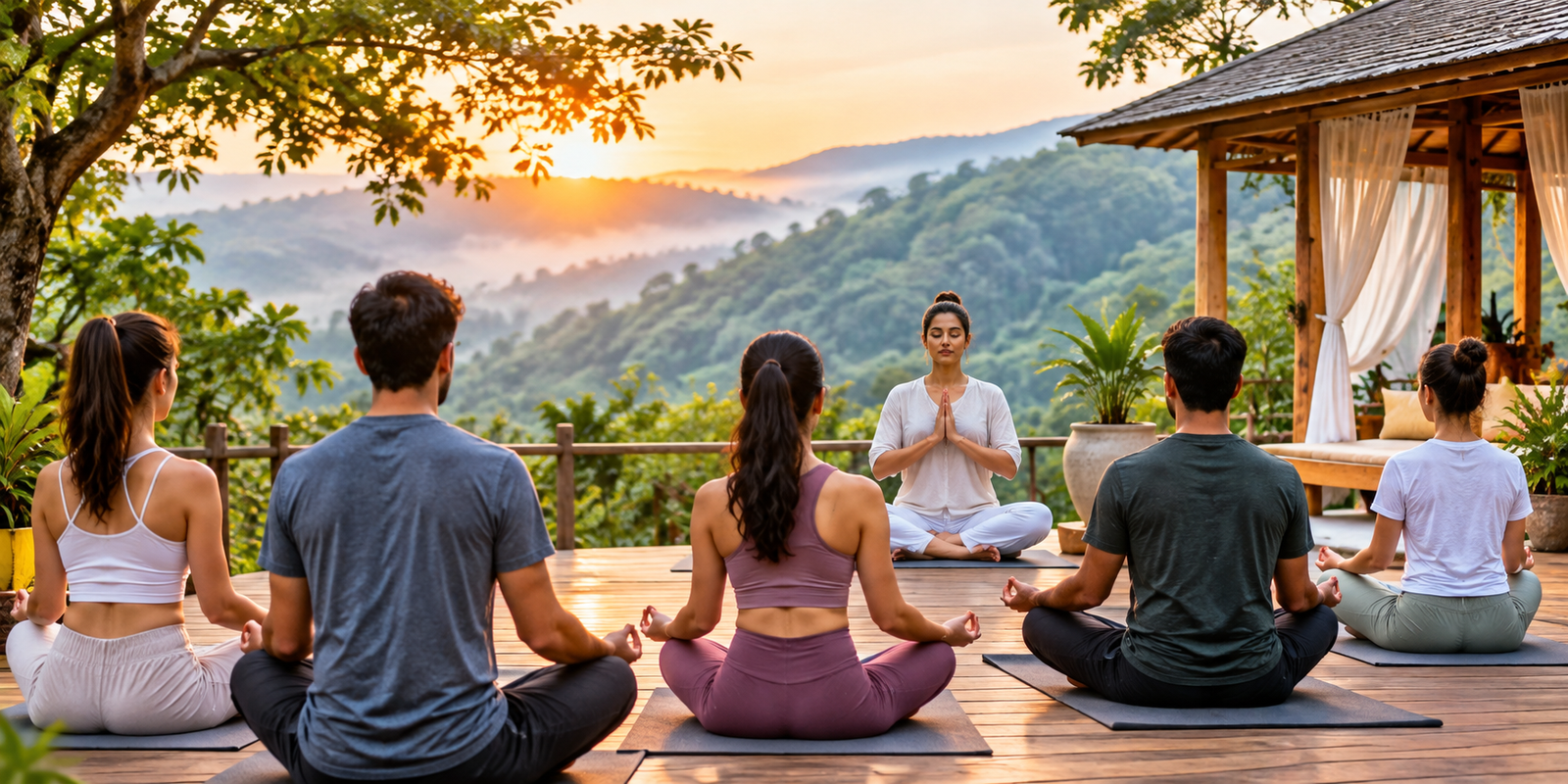
A yoga teacher training retreat combines organized instruction with an immersive setting. Participants may follow a daily rhythm that includes physical practice, theoretical study, meditation, group discussions, and periods of personal reflection. Rather than attending lessons and immediately returning to their usual routines, they spend an extended period in an environment centered on yoga.
Traditional programs can offer valuable structure, consistency, and access to experienced instructors. Retreat-based formats offer a different kind of continuity by bringing learning and daily life closer together. Understanding these differences can help people decide which educational environment better matches their expectations, availability, and preferred way of learning.
1. Learning Becomes Part of the Daily Environment
One of the most noticeable differences between retreat-based and conventional training is the way learning fits into everyday life. In a traditional program, participants may attend scheduled sessions before returning to work, family responsibilities, or other commitments. Their learning is often divided between classroom hours and independent practice.
A residential retreat creates a more concentrated environment. The subject of yoga remains part of the daily routine, even outside formal lessons. Participants may begin the morning with meditation, continue with an instructional session, and revisit ideas through informal conversations later in the day.
This continuity can make it easier to connect different areas of study. For example, a lesson about mindful movement may become more meaningful when participants have opportunities to consider it during their own practice. Similarly, discussions about concentration and awareness can be revisited during quiet periods.
An immersive environment does not automatically make learning easier, and it may feel demanding for people who prefer shorter sessions. However, it offers a distinctive opportunity to explore yoga without constantly shifting attention between training and unrelated daily responsibilities.
2. The Daily Schedule Often Has a Different Rhythm
Traditional training programs commonly organize learning around specific class times. Participants arrive for a lesson, complete the scheduled work, and continue with the rest of their day. This arrangement can be practical for people who need to maintain their existing routines.
A retreat usually brings several activities together within a planned daily schedule. The rhythm may include physical practice, study, meals, rest, and personal time. The exact structure depends on the program, its duration, and the subjects being taught.
A typical schedule might look like this:
| Part of the day | Possible activity | Learning purpose |
|---|---|---|
| Early morning | Meditation or gentle movement | Establishing focus and awareness |
| Morning | Guided yoga practice | Exploring movement, posture, and breath |
| Late morning | Theory or philosophy session | Understanding concepts and traditions |
| Afternoon | Practical workshops or discussion | Applying ideas and asking questions |
| Late afternoon | Independent practice or rest | Reviewing material at an individual pace |
| Evening | Reflection or group discussion | Connecting the day’s learning |
This is an illustrative schedule rather than a standard timetable. Some programs may include longer practical sessions, while others may provide more time for independent study or rest.
The important difference is the continuity of the experience. In a residential setting, participants can move from one learning activity to another without having to travel between separate locations or reorganize their day around outside commitments.
3. Participants Share More Than Classroom Time
In a conventional course, interaction may be concentrated around lessons and scheduled group activities. Participants can develop meaningful connections, but their opportunities to spend time together may be limited by different work schedules, travel arrangements, or personal commitments.
During a retreat, participants often share meals, breaks, accommodation facilities, and informal conversations. These everyday interactions can create additional opportunities to exchange ideas and learn from different perspectives.
A group may include people with different levels of experience, educational backgrounds, and reasons for studying yoga. Some may be interested in deepening their personal practice, while others may be exploring whether teaching is a suitable future direction.
The shared environment can encourage participants to:
- Exchange observations about practical sessions and course material.
- Discuss questions that arise during independent practice.
- Learn how others approach unfamiliar concepts or challenges.
- Build connections through shared activities and daily routines.
However, group living is not equally comfortable for everyone. Some people appreciate frequent interaction, while others need more privacy and quiet time to feel settled. Before choosing a residential program, it is useful to understand its accommodation arrangements, group size, and opportunities for personal space.
A supportive group environment should allow participants to engage with one another without creating pressure to participate in every social activity.
4. The Surroundings Can Influence the Experience
The physical environment is another feature that may distinguish a retreat from a conventional training program. Traditional courses can take place in studios, educational facilities, or community spaces. These settings can be well suited to focused instruction and regular attendance.
Retreat environments may be located in quieter surroundings, such as countryside properties, coastal settings, or purpose-designed residential centers. The change of environment can provide a break from familiar distractions and create more opportunities to focus on the scheduled activities.
Natural surroundings may also offer spaces for walking, quiet reflection, or individual time between sessions. These experiences can complement formal instruction, although they should not be treated as a substitute for qualified teaching or structured course content.
It is important to avoid assuming that a beautiful location guarantees a high-quality educational experience. The setting is only one part of the decision. Participants should also consider the curriculum, teaching approach, instructor qualifications, facilities, and practical arrangements.
A well-organized program should make its educational purpose clear, regardless of whether it takes place in a city studio or a remote retreat center.
5. Personal Practice Can Become More Consistent
A regular training schedule can help participants establish a routine. However, people attending a course alongside work, education, or family commitments may find it difficult to practice consistently outside their scheduled sessions.
A residential format can make regular practice easier to organize because participants are already in an environment where yoga activities are part of the daily timetable. They may have access to designated practice spaces and planned periods for reviewing what they have learned.
A yoga teacher training retreat may include opportunities to explore different aspects of practice across several sessions. For instance, participants might study alignment during a practical class, examine relevant concepts in a theory session, and then revisit their understanding through supervised exercises.
Consistency should not be confused with intensity. More practice is not necessarily better, particularly when participants are unfamiliar with certain movements or are adjusting to a demanding schedule. Good instruction should account for different experience levels and provide appropriate modifications.
Participants should feel able to communicate when they need clarification, a break, or an alternative approach to an activity. A balanced program recognizes that learning involves attention, recovery, and time to understand new material.
6. The Balance Between Study and Rest Matters
Retreat schedules can be full, and the concentration of activities may feel different from attending one or two classes each week. Participants might spend several hours studying, practicing, discussing, and reviewing material throughout the day.
For this reason, rest is an important part of the overall experience. Breaks allow participants to process information, manage their energy, and return to sessions with greater attention. Personal time can also help people reflect on what they have learned without feeling that every moment must be productive.
When reviewing a residential program, it is worth considering:
- Whether the timetable includes reasonable breaks between sessions.
- Whether participants have access to quiet spaces and comfortable facilities.
- Whether the schedule allows enough time for meals and sleep.
- Whether the program explains how physically demanding sessions are managed.
A program that clearly communicates its daily expectations can help participants prepare more realistically. It should also explain what happens if someone needs to modify an activity or take additional rest.
Traditional programs may provide more flexibility for participants who prefer to manage their own practice outside class hours. The best arrangement depends on personal circumstances and the level of structure someone finds helpful.
7. Teaching and Learning Can Extend Beyond Formal Lessons
A retreat does not remove the need for organized teaching. In fact, a clear curriculum is just as important in an immersive setting as it is in a conventional course.
The difference is that informal learning opportunities may become more frequent. A conversation during a meal, a question raised during a break, or a discussion after practice can help participants revisit ideas introduced in a formal session.
These interactions should complement the curriculum rather than replace planned instruction. Participants still need clear explanations, appropriate demonstrations, constructive feedback, and time to develop practical understanding.
A yoga teacher training retreat may provide an environment in which participants can repeatedly connect theory with practice. For example, a discussion about breath awareness may be followed by guided exercises and later reflection. This creates opportunities to approach the same subject from different perspectives.
The quality of this experience depends on how instructors organize the learning process. Participants should know which activities are part of the formal curriculum, what skills or knowledge the course aims to develop, and how their progress will be reviewed.
8. Choosing Between the Two Formats Requires Practical Consideration
Neither retreat-based nor traditional training is automatically the better option. Each format has advantages, and the right choice depends on what participants need from the experience.
A residential program may appeal to people who want an extended period of focused study and are comfortable temporarily stepping away from their usual routines. A conventional program may be more suitable for those who need to remain close to home, maintain employment, or spread their learning over a longer period.
Before making a decision, it helps to compare the actual structure of each course rather than relying only on its description or setting.
Important factors include:
- Curriculum: Review the subjects covered, the balance between theory and practice, and the learning outcomes.
- Teaching team: Check instructors’ relevant experience, qualifications, and approach to participant support.
- Schedule: Consider the number of teaching hours, daily workload, breaks, and overall duration.
- Facilities: Review accommodation, practice spaces, meals, accessibility, and available amenities.
- Costs: Understand what the fee includes and whether travel, equipment, meals, or other expenses are separate.
- Recognition: If certification is important, verify the issuing organization and the exact status of the qualification.
Asking questions before enrolling can prevent misunderstandings. A provider should be able to explain the program’s structure, attendance expectations, assessment methods, and any requirements for completing the course.
9. Immersion Does Not Guarantee a Better Learning Outcome
The concentrated nature of a retreat can be appealing, but it is important to approach expectations realistically. Spending more time in a yoga-focused environment does not guarantee that every participant will learn at the same pace or achieve the same results.
People absorb information differently. Some benefit from repeated instruction over several days, while others prefer time between sessions to review material and practice independently. A residential course may feel motivating to one person and overwhelming to another.
A yoga teacher training retreat should therefore be evaluated according to the quality of its educational design, not simply the number of activities or the atmosphere of its location.
Participants should look for a program that explains how practical skills are taught, how questions are addressed, and how different learning needs are accommodated. It is also useful to understand whether the course includes supervised teaching practice, feedback, written work, or other forms of assessment.
The most meaningful experience is one in which the format supports clear learning goals while respecting individual differences.
10. Understanding What Happens After the Program
Another useful distinction concerns how participants continue their learning after the course ends. A traditional program may take place over several weeks or months, allowing participants to develop habits gradually while remaining connected to their everyday environment.
A residential retreat often has a defined beginning and end. Once participants return home, they may need to create their own routine for reviewing course material and maintaining a regular practice.
This transition is worth considering before enrollment. Participants can ask whether the program provides learning resources, recommended reading, opportunities for continued study, or guidance on next steps.
For those interested in teaching, completing a course should not be viewed as the end of professional development. Teaching involves ongoing learning, thoughtful communication, practical experience, and an understanding of the responsibilities involved in working with different students.
People attending primarily for personal study may also benefit from setting realistic goals for continuing their practice. A simple routine that fits everyday life can be more sustainable than trying to recreate an intensive retreat schedule.
Conclusion
The difference between a retreat-based experience and a traditional training program goes beyond the location of the lessons. It involves the daily schedule, the learning environment, opportunities for interaction, and the way participants balance formal instruction with personal time.
A residential format can offer continuity and a concentrated opportunity to explore yoga, while conventional programs may provide greater flexibility and a structure that fits around everyday responsibilities. Neither approach guarantees a particular outcome, and both can offer meaningful educational experiences when thoughtfully organized.
Choosing the right format starts with understanding personal expectations and examining the details of the course. By considering the curriculum, instructors, schedule, facilities, and learning support, participants can make a more informed decision about the environment in which they are most likely to learn comfortably and consistently.
Frequently Asked Questions
1. What is the main difference between a yoga retreat and a traditional training program?
A yoga retreat generally combines structured instruction with an immersive residential or retreat-style environment. A traditional program may focus more on scheduled classes that participants attend while continuing their usual daily routines. The exact difference depends on the course structure.
2. Is a retreat-based training program suitable for beginners?
Some programs welcome beginners, while others expect participants to have previous experience. Entry requirements vary, so it is important to check the course description and ask the organizers about recommended experience levels before enrolling.
3. Do all yoga retreats include teacher training?
No. Some retreats focus on relaxation, personal practice, meditation, or general learning rather than professional education. Anyone seeking formal teacher training should confirm that the program includes a structured curriculum and clearly stated learning outcomes.
4. How should participants prepare for a residential yoga program?
Preparation may include reviewing the schedule, checking what equipment is provided, arranging travel, and understanding accommodation details. Participants should also ask about physical expectations, meals, clothing recommendations, and any materials they need to bring.
5. Does completing a yoga retreat automatically qualify someone to teach?
Not necessarily. Certification and teaching eligibility depend on the program, its curriculum, the issuing organization, and any relevant recognition requirements. Participants should verify the exact qualification offered rather than assuming that every retreat provides a professional teaching credential.
About the Author