
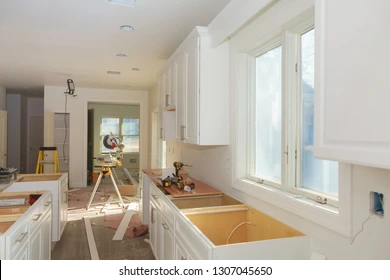
Cabinets influence how a kitchen looks, feels, and functions. When doors become damaged, shelves sag, finishes deteriorate, or storage no longer meets household needs, replacing them may become an important renovation decision. However, removing every cabinet is not always necessary. Some kitchens need improved hardware and internal organization, while others require a completely different storage arrangement. Careful Kitchen remodeling Tarzana planning helps homeowners determine which improvements provide practical value.
The first step is understanding the condition of the existing cabinets and identifying what currently limits their usefulness.
1. Decide Whether Replacement Is Actually Necessary
Before purchasing new cabinets, inspect the cabinet boxes, doors, hinges, shelves, and surrounding walls.
If the cabinet structure remains strong and the problem is primarily cosmetic, repainting or refinishing may be sufficient. Replacing handles, adjusting hinges, and installing drawer organizers can also improve functionality.
However, replacement may be more appropriate when cabinets have water damage, deteriorating particleboard, loose connections, persistent mold problems, or unsuitable dimensions.
For example, a kitchen with structurally sound cabinets but worn painted doors might benefit from refinishing. A kitchen with damaged cabinet boxes and insufficient storage may require a more extensive solution.
2. Compare Common Cabinet Materials
Different cabinet materials offer different combinations of appearance, strength, maintenance, and price.
Solid Wood
Solid wood is valued for its natural appearance and ability to be refinished. It can be durable when properly constructed and maintained. However, changes in humidity may cause expansion or contraction.
Plywood
Plywood cabinet boxes are constructed from layered wood veneers. Quality plywood can provide good structural stability and resistance to everyday use. Edge finishing and proper installation remain important.
Medium-Density Fiberboard
MDF is commonly used for painted cabinet doors because it provides a smooth surface. It can be economical, but prolonged moisture exposure may cause swelling or deterioration.
Particleboard
Particleboard is often used in lower-cost cabinetry. Its performance depends on manufacturing quality, hardware, and protection against moisture. Damaged sections may be difficult to repair.
Homeowners should compare the construction of cabinet boxes, drawer joints, hinges, and shelf supports rather than judging quality by the exterior finish alone.
3. Improve Storage With Better Cabinet Design
Replacing cabinets creates an opportunity to organize items according to how the kitchen is used.
Deep drawers can hold pots and pans more conveniently than traditional lower shelves. Pull-out pantry units improve access to food supplies, while vertical dividers provide organized spaces for baking trays.
Corner cabinets deserve particular attention. Traditional corner shelves can make stored items difficult to reach. Lazy Susans, pull-out corner systems, and specialized drawers can improve accessibility.
For a household that cooks regularly, placing cookware near the cooking surface and dishes near the dishwasher may reduce unnecessary movement.
4. Match Cabinet Colors and Finishes With the Room
Cabinet finishes should complement flooring, countertops, backsplash materials, and natural lighting.
Light-colored cabinets can help smaller kitchens feel brighter. Wood finishes introduce warmth, while darker colors may create contrast in larger spaces with sufficient lighting.
Matte finishes can reduce visible reflections, although some surfaces may show fingerprints. Gloss finishes reflect light but may highlight scratches and smudges.
Homeowners should review physical samples under the kitchen’s actual lighting before making final decisions. A finish that looks attractive in a showroom may appear different beside existing flooring or windows.
5. Understand the Financial Considerations
Cabinet replacement costs depend on the number of units, dimensions, material selection, construction quality, hardware, and installation complexity.
Stock cabinets are generally available in standard sizes and may reduce manufacturing expenses. Semi-custom cabinets provide additional sizing and finish choices. Fully custom cabinetry offers greater design flexibility but usually involves more planning and production work.
Additional expenses may include demolition, disposal, wall repairs, countertop removal, plumbing disconnection, and new hardware.
For a realistic estimate, request itemized pricing rather than relying on one total figure. Confirm whether measurements, delivery, installation, finishing, and adjustments are included.
A useful way to control spending during Kitchen remodeling Tarzana is to preserve cabinet locations where they already work well. Changing the entire layout can introduce additional electrical, plumbing, and construction expenses.
6. Consider Permits and Installation Requirements
Permit requirements depend on the nature of the renovation and local jurisdiction. The Los Angeles Department of Building and Safety identifies qualifying residential kitchen remodels without structural changes as potentially eligible for express permits. Changes involving structural elements may require plan review.
Homeowners should also confirm whether the project involves new electrical outlets, plumbing connections, ventilation, or changes to walls.
The official LADBS permitting guidance provides information about permit pathways. Properties outside the City of Los Angeles may have different requirements.
Installation should include accurate measurements, level cabinet positioning, secure wall attachment, and appropriate clearances for appliances.
7. Prepare a Cabinet Replacement Checklist
Before approving the project, confirm the following:
- Existing cabinet condition has been evaluated.
- Storage requirements have been documented.
- Appliance dimensions have been checked.
- Door styles and finishes have been selected.
- Hardware quality has been reviewed.
- Installation and disposal costs are included.
- Permit requirements have been investigated.
- The renovation schedule is clearly explained.
Frequently Asked Questions
Can existing countertops be reused after cabinet replacement?
Sometimes, but removing cabinets can affect countertop support and risk damaging the surface. Reuse depends on construction, dimensions, and installation conditions.
Are custom cabinets always better?
Not necessarily. Standard or semi-custom cabinets can meet many household needs at a lower cost. Custom options are most useful when unusual dimensions or specialized storage are required.
How can cabinet life be extended?
Clean spills promptly, avoid excessive moisture, maintain hinges, and repair damaged finishes before problems spread.
Conclusion
Cabinet replacement should solve identifiable storage, durability, and usability problems rather than simply introduce a new appearance. Comparing materials, reviewing installation details, and establishing a realistic budget can prevent avoidable complications. Homeowners planning greenstar remodeling Tarzana improvements should evaluate whether refinishing, partial replacement, or complete cabinetry replacement best supports their household’s long-term needs. A detailed estimate can clarify the work involved before materials are ordered.
About the Author