professional bed bug removal service
You wake up with unexplained bites, notice suspicious marks on your bedding or discover a small insect near your mattress. Your first question is probably: where did these bed bugs come from?
Bed bugs can appear in almost any home, including clean and well-maintained properties. They do not develop from dust, dirt or poor housekeeping. Instead, they usually arrive from another location, hidden inside belongings or furniture.
In a busy city like London, people regularly travel, move between properties and share accommodation. These everyday activities can create opportunities for bed bugs to spread.
Understanding how they enter your home is the first step towards reducing the risk of an infestation.
What Are Bed Bugs?
Bed bugs are small, flat insects that feed on blood, primarily from humans.
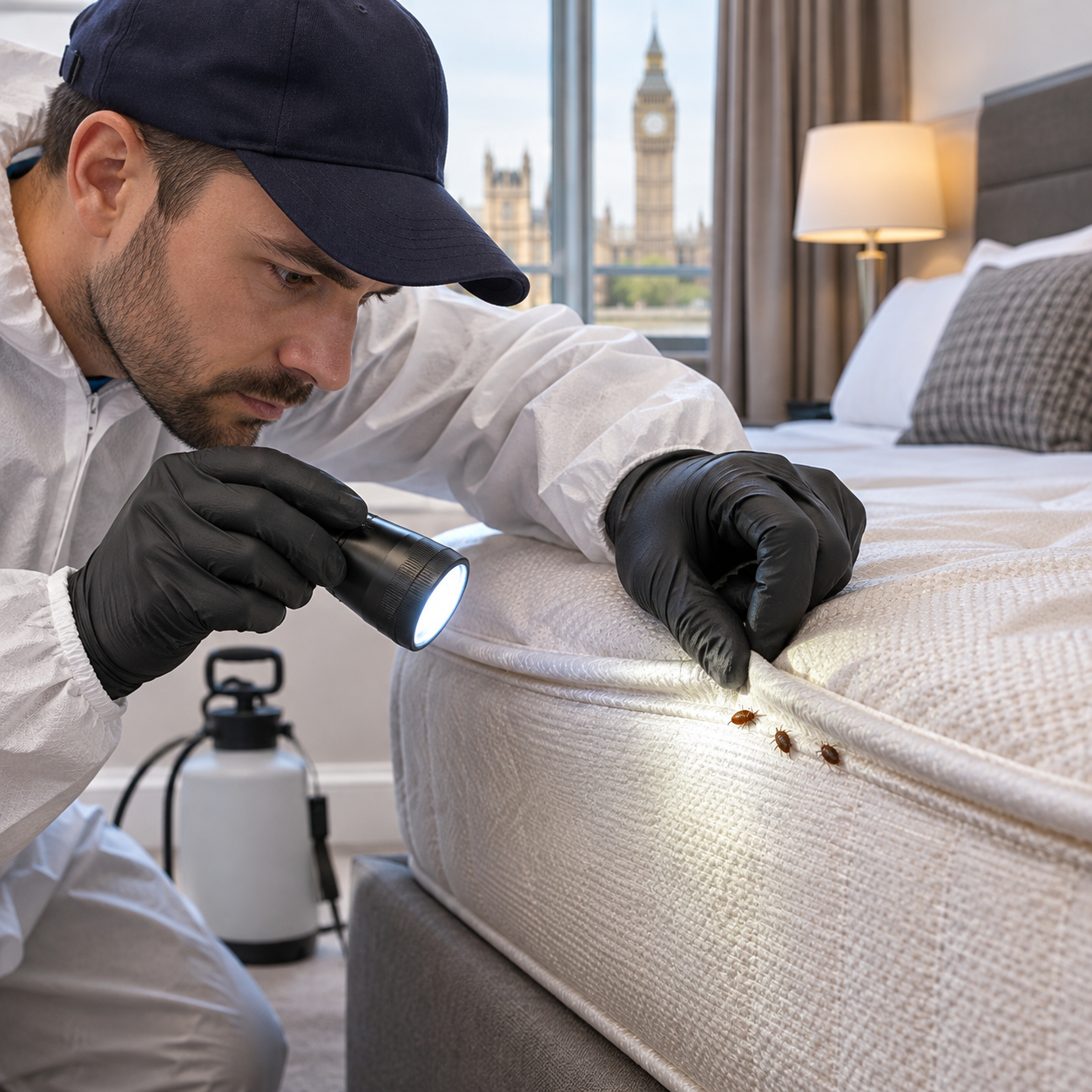
Adult bed bugs are usually reddish-brown and approximately the size of an apple seed. Younger insects are smaller and lighter in colour.
They cannot fly or jump. Instead, they crawl between hiding places and are often transported inside everyday items.
Bed bugs are usually most active at night, although they can feed at other times.
During the day, they tend to hide close to sleeping areas, including bed frames, mattress seams, furniture joints and narrow wall gaps.
Their ability to remain unnoticed is one reason infestations can develop before people realise something is wrong.
How Do Bed Bugs Get Into Your Home?
Bed bugs do not appear spontaneously. They are introduced from somewhere else.
Several common situations can bring them into a property.
1. Travelling With Luggage
Travel is one possible source of bed bug introductions.
Hotels, holiday rentals, hostels and other accommodation can occasionally experience infestations.
Bed bugs may hide inside suitcase seams, pockets, zips or folded clothing.
When you return home, the insects can leave your luggage and find new hiding places.
You might not notice anything unusual during your trip.
A single unnoticed insect does not always lead to an established infestation, but bringing fertilised females or multiple insects indoors can create a risk.
Inspecting luggage after travel is therefore a sensible precaution.
2. Bringing Home Personal Belongings
Suitcases are not the only items that can carry bed bugs.
Backpacks, overnight bags, bedding, boxes and other belongings may transport insects from an infested environment.
Bed bugs do not normally live permanently on the human body like lice.
Instead, they use objects as temporary hiding places.
This distinction matters because carrying bed bugs does not necessarily mean someone has poor personal hygiene.
The insects simply take advantage of opportunities to move between locations.
3. Moving Into a New Property
Moving house can also introduce bed bugs.
You may accidentally transport insects inside furniture or packed belongings from an affected property.
Alternatively, a furnished room could already contain bed bugs before you arrive.
Inspecting beds, sofas and accessible furniture joints before moving in can help identify suspicious evidence.
If you discover a problem, report it promptly to the landlord or property manager.
Avoid assuming that a freshly decorated or recently cleaned property is automatically free from insects.
4. Second-Hand Furniture
Used furniture is another recognised route.
Bed bugs can hide in sofas, mattresses, upholstered chairs and wooden furniture joints.
An item may look clean while insects remain hidden inside its structure.
This is particularly important when accepting furniture from unknown sources or collecting items advertised as free.
Inspect second-hand items carefully before bringing them into your home.
We cover this risk in more detail in our separate guide to bed bugs in second-hand furniture.
5. Movement Between Connected Properties
In some apartment buildings and converted houses, bed bugs can move between neighbouring spaces.
They may travel through structural gaps, service openings or shared areas.
This does not mean every infestation will spread between flats.
However, adjoining properties can become involved, especially when a problem remains untreated.
In areas with older buildings and converted flats, such as Hackney, early identification is particularly important. Residents dealing with an infestation can explore our bed bug treatment in Hackney service for professional chemical treatment and practical aftercare guidance.
Residents should inform their landlord or building manager if an infestation appears to affect multiple units.
Do Bed Bugs Only Live in Dirty Homes?
No. This is one of the most common misconceptions.
Bed bugs are not attracted to dirty kitchens, leftover food or household rubbish.
They look for access to a blood meal and suitable hiding places.
A spotless bedroom can become infested if insects arrive inside luggage or furniture.
Good housekeeping may make inspections easier, but cleaning alone cannot guarantee protection.
The most useful approach is to recognise possible introduction routes and respond quickly when evidence appears.
How Quickly Can Bed Bugs Spread?
The speed of an infestation depends on several factors.
These include the number of insects introduced, temperature, access to hosts and opportunities to move between rooms.
Female bed bugs can lay multiple eggs over time, allowing a population to grow when conditions are suitable.
However, not every introduction becomes a major infestation.
Some insects may die before reproducing, while others can establish themselves in protected hiding places.
The important point is that delays can make an established infestation harder to manage.
If you repeatedly find insects or other physical evidence, do not ignore the problem.
How Can You Reduce the Risk After Travelling?
You do not need to avoid travelling, but a few practical habits can help.
Before unpacking in unfamiliar accommodation, check the mattress seams and headboard for visible signs.
Keep luggage off beds and upholstered furniture.
Use a suitable luggage rack positioned away from walls where possible.
When returning home, inspect the suitcase and unpack in an area where items can be checked easily.
Wash and dry suitable clothing using care-label-approved settings that are effective against bed bugs.
Avoid placing an unchecked suitcase directly on your bed.
Store luggage away from sleeping areas after inspection.
These measures cannot eliminate every risk, but they make accidental introductions less likely.
What Should You Do If You Suspect Bed Bugs?
Start by looking for physical evidence.
Check the mattress edges, headboard, bed frame and nearby furniture.
Look for live insects, shed skins, dark spotting or small eggs.
Do not rely only on skin bites, because other insects and skin conditions can produce similar reactions.
If you find an insect, take a photograph or safely contain it for identification.
Avoid carrying potentially affected furniture into another room.
Do not begin spraying random chemicals around your property.
If the problem is confirmed, a targeted treatment plan can help address the affected areas.
Professional Bed Bug Help in East London
If you suspect that bed bugs have entered your home, professional advice can help you understand the next steps.
At Bed Bugs East London, we provide chemical bed bug treatment for homes, flats and rental properties across East London.
Our service focuses on affected areas, suitable treatment methods and practical preparation and aftercare advice.
Find out more about our professional bed bug removal service.
For local assistance, visit Bed Bugs East London or call 07818 329 925 to discuss your concerns.
Identifying the source is not always possible, but understanding how bed bugs travel can help you respond early and reduce the risk of further spread.
About the Author